Upgrade Your iPhone Experience with a Stylish MagSafe Wallet
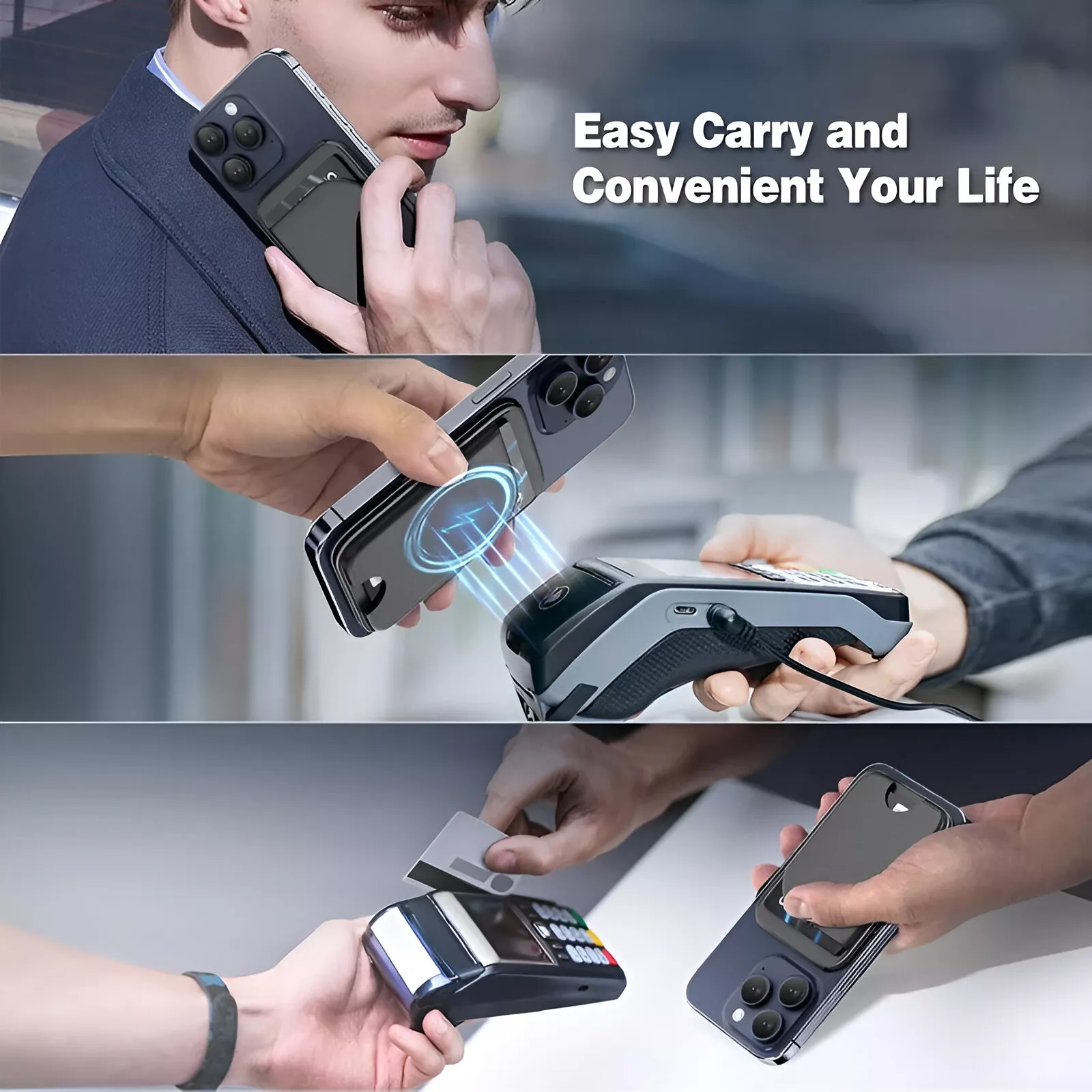
Take your iPhone to the next level with this leather MagSafe wallet, designed specifically for Apple iPhone models 16, 15, 14, and 13. With a seamless blend of style, functionality, and innovation, this wallet is the perfect accessory for anyone looking to stay organized and make the most of their device. Whether you’re commuting, working, or just on the go, this wallet ensures your essentials are always within reach.
Why Choose This MagSafe Wallet?
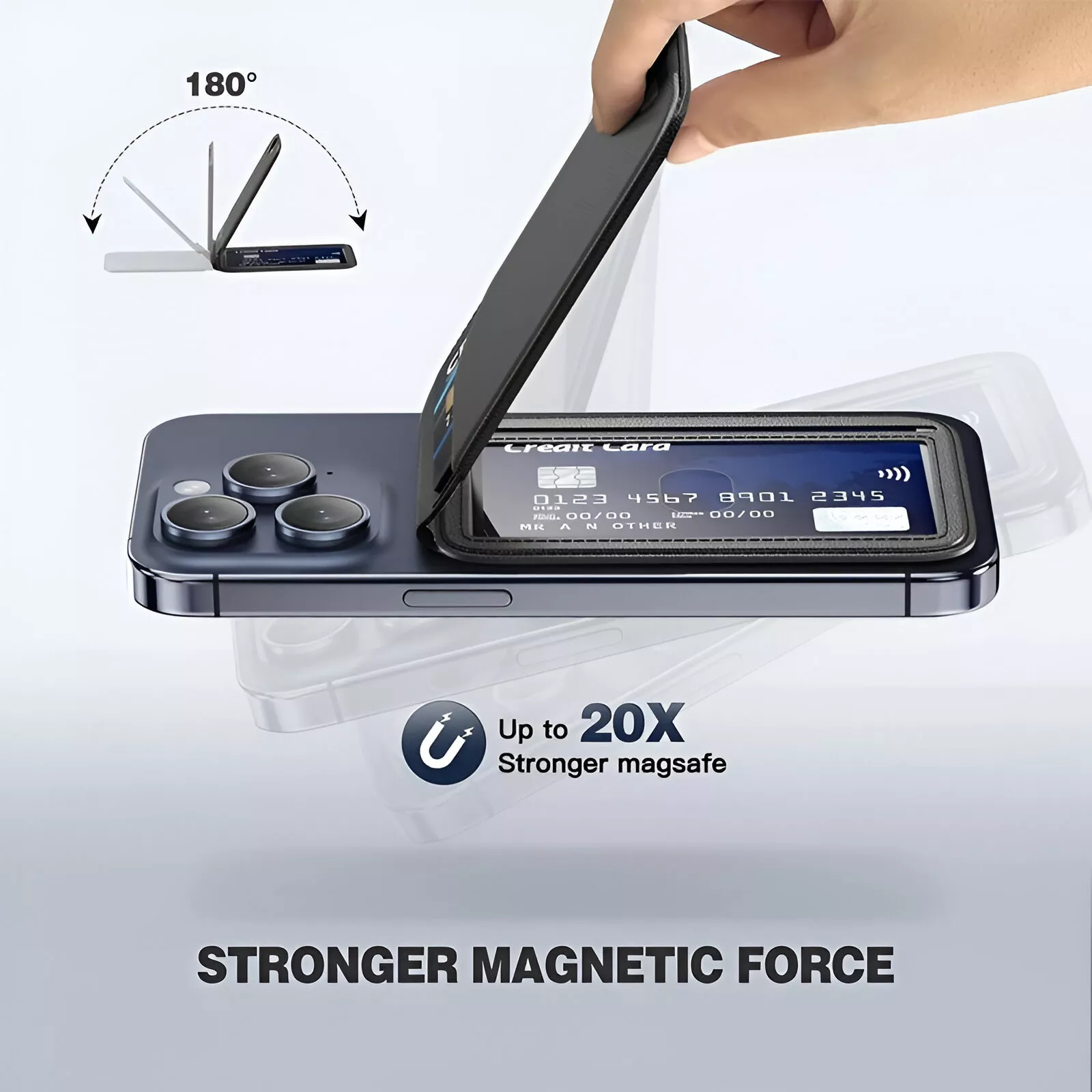
Unlike standard cardholders, this MagSafe wallet features a powerful magnetic hold with 20 N52 magnets, providing 3,200 g of holding force—four times stronger than the official MagSafe wallet. This ensures precise alignment and secure attachment to your iPhone, so you can trust your essentials to stay in place.
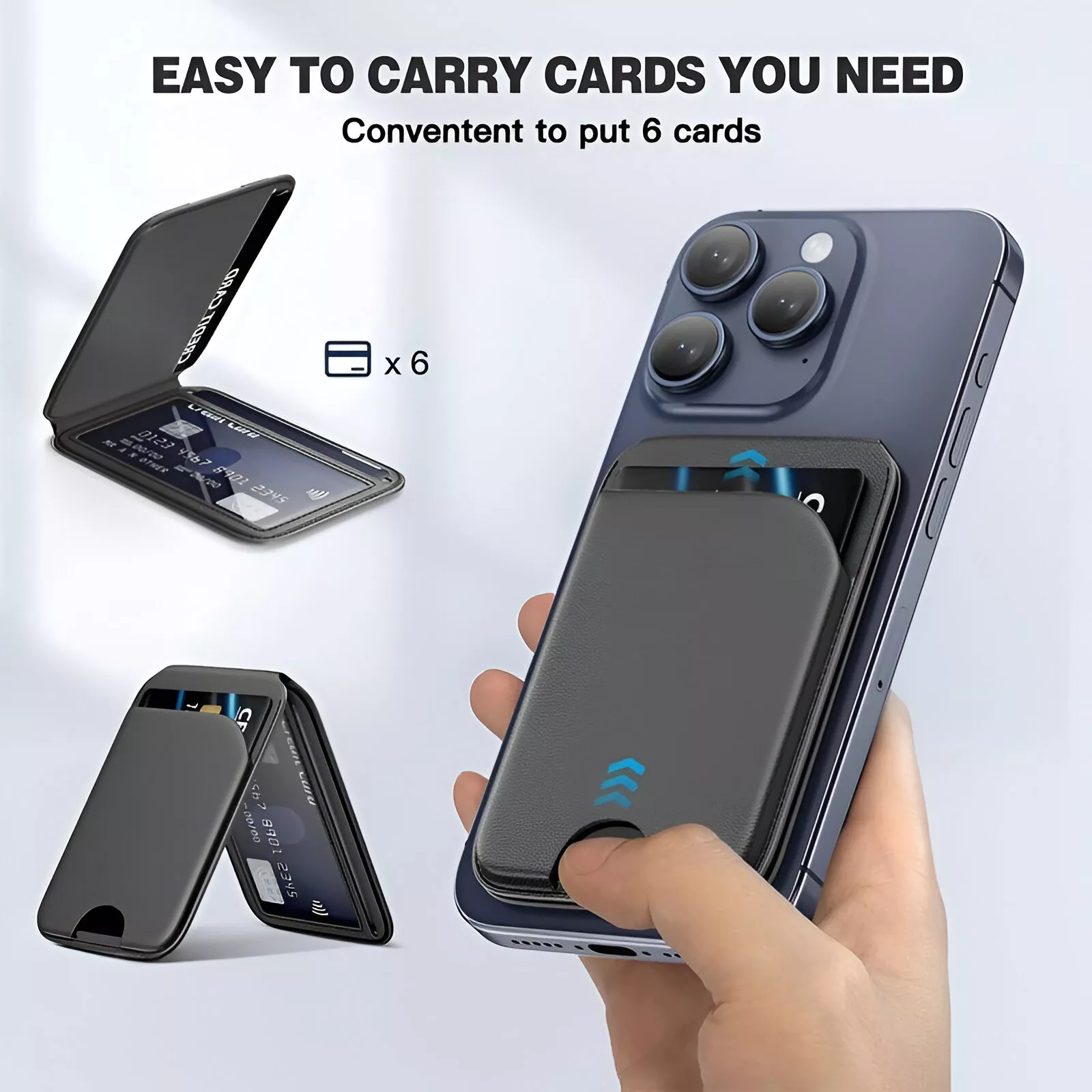
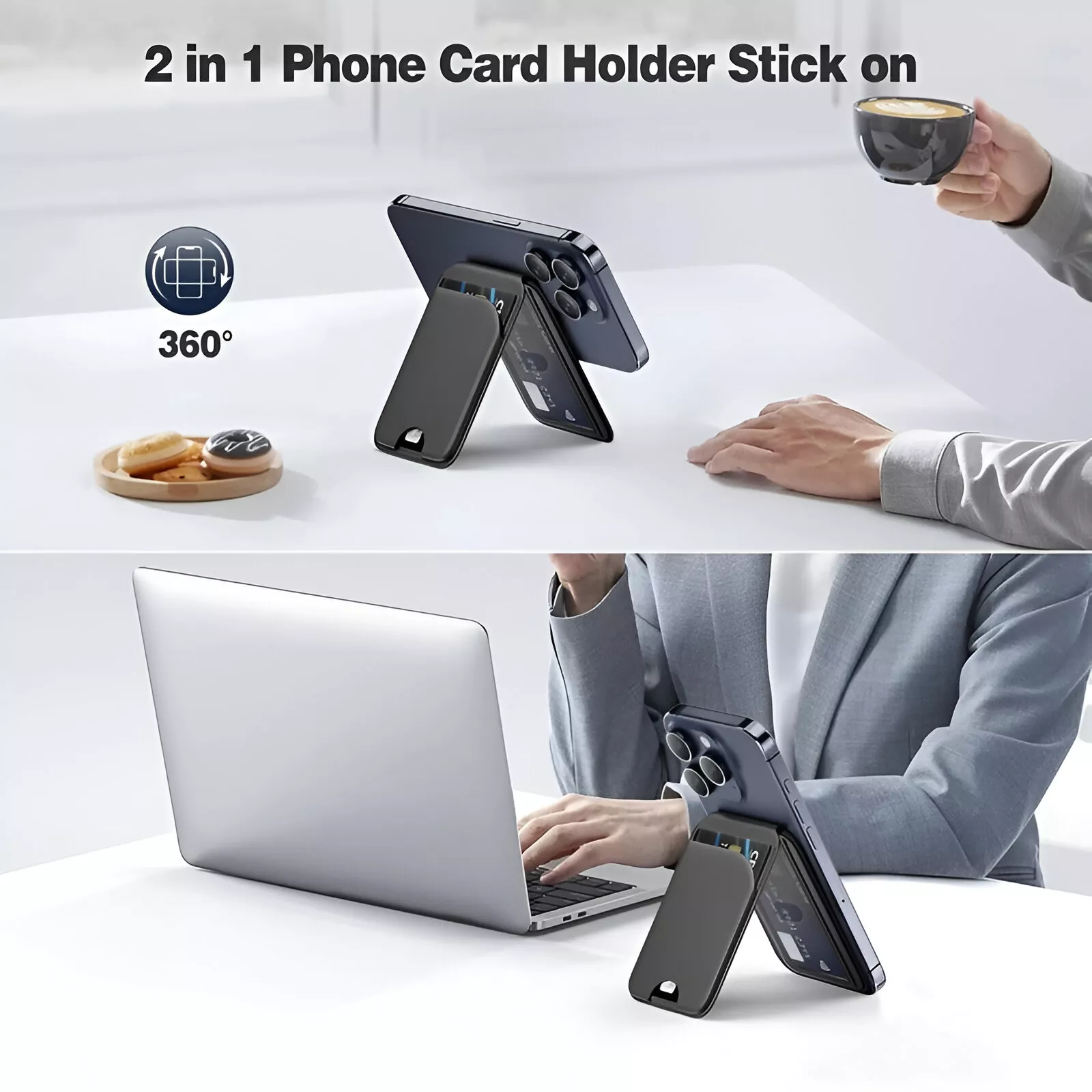
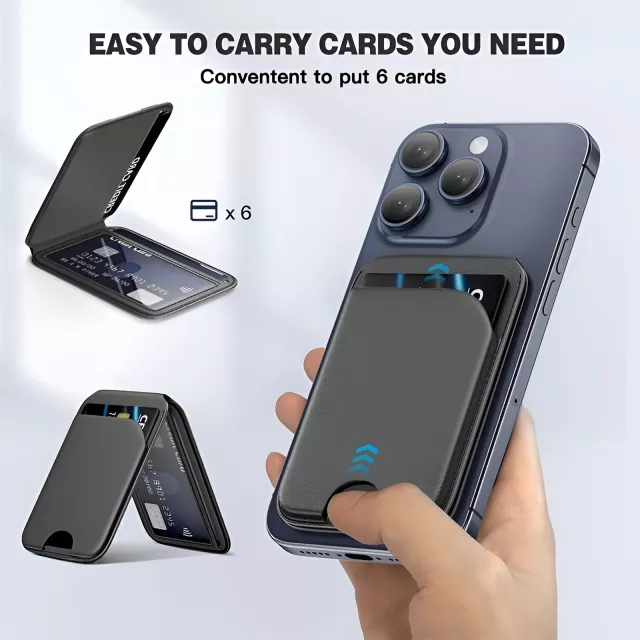
Its smart design accommodates up to six cards, keeping them securely stored while maintaining a slim profile. The built-in adjustable hinge transforms the wallet into a versatile stand, offering three viewing modes: horizontal, vertical, and hanging. Perfect for streaming, video calls, or hands-free browsing!
Key Features
- Strong Magnetic Hold: 3,200 g holding force with 20 N52 magnets for unmatched stability.
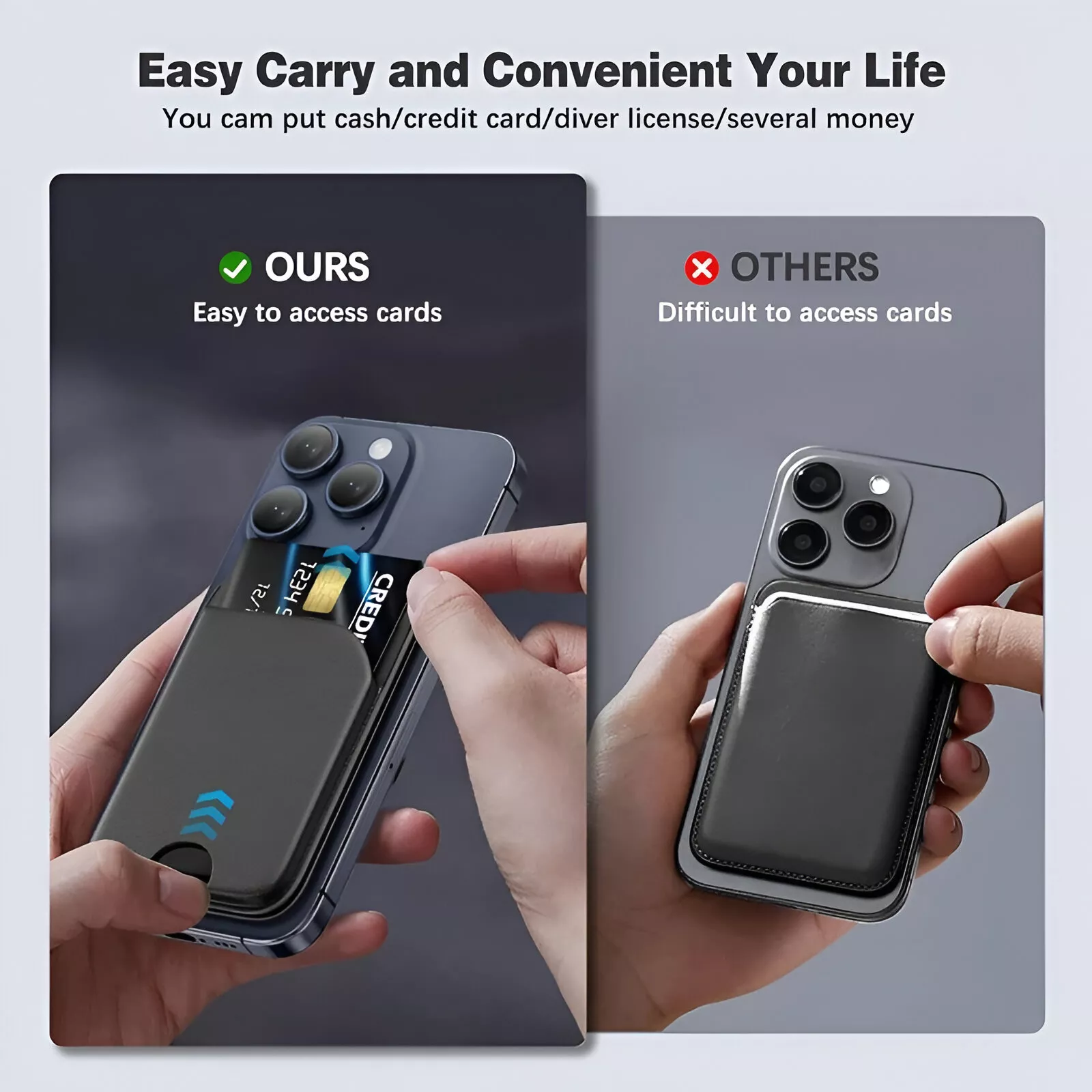
- Smart Card Storage: Holds 1-6 cards securely, with an easy-access slot for convenience.
- Multi-Angle Adjustable Stand: Built-in hinge supports horizontal, vertical, and hanging modes.
- RFID Magnetic Card Protection: Keep your cards safe from unauthorized scanning.
- High Compatibility: Designed for MagSafe-compatible iPhones and cases (16/15/14/13/12 series, excluding mini models).
Benefits You’ll Love
- Convenience: Store your cards and stand your phone all in one sleek accessory.
- Style: Premium leather finish in black, grey, green, or brown to match your aesthetic.
- Durability: High-quality materials ensure longevity and reliable performance.
- Ease of Use: A dedicated slot allows quick card access without hassle.
- Versatility: Adjustable stand positions cater to your needs, whether for work or leisure.
Experience the Perfect Blend of Functionality and Style
This MagSafe wallet is more than an accessory—it’s a tool to simplify your life and elevate your style. Whether you’re heading to a meeting, traveling, or enjoying a day out, keep your cards organized, your phone accessible, and your hands free. Compatible with MagSafe iPhones (12 series or later), it’s the ideal companion for your Apple device.
Don’t Wait—Enhance Your iPhone Today!
Add this premium MagSafe wallet to your essentials and enjoy the perfect mix of form and function. It’s time to carry your world in style.
We are proud to offer international shipping services that currently operate in over 200 countries and islands world wide. Nothing means more to us than bringing our customers great value and service. We will continue to grow to meet the needs of all our customers, delivering a service beyond all expectation anywhere in the world.
How do you ship packages?
Packages from our warehouse in China will be shipped by ePacket or EMS depending on the weight and size of the product. Packages shipped from our US warehouse are shipped through USPS.
Do you ship worldwide?
Yes. We provide shipping to over 200 countries around the world. However, there are some locations we are unable to ship to. If you happen to be located in one of those countries we will contact you.
What about customs?
We are not responsible for any custom fees once the items have shipped. By purchasing our products, you consent that one or more packages may be shipped to you and may get custom fees when they arrive to your country.
How long does shipping take?
Shipping time varies by location. These are our estimates:
| Location | *Estimated Shipping Time |
| United States | 10-30 Business days |
| Canada, Europe | 10-30 Business days |
| Australia, New Zealand | 10-30 Business days |
| Central & South America | 15-30 Business days |
| Asia | 10-20 Business days |
| Africa | 15-45 Business days |
Do you provide tracking information?
Yes, you will receive an email once your order ships that contains your tracking information. If you haven’t received tracking info within 5 days, please contact us.
My tracking says “no information available at the moment”.
For some shipping companies, it takes 2-5 business days for the tracking information to update on the system. If your order was placed more than 5 business days ago and there is still no information on your tracking number, please contact us.
Will my items be sent in one package?
For logistical reasons, items in the same purchase will sometimes be sent in separate packages, even if you've specified combined shipping.
If you have any other questions, please contact us and we will do our best to help you out.
Order cancellation
All orders can be cancelled until they are shipped. If your order has been paid and you need to make a change or cancel an order, you must contact us within 12 hours. Once the packaging and shipping process has started, it can no longer be cancelled.
Refunds
Your satisfaction is our #1 priority. Therefore, you can request a refund or reshipment for ordered products if:
- If you did not receive the product within the guaranteed time( 45 days not including 2-5 day processing) you can request a refund or a reshipment.
- If you received the wrong item you can request a refund or a reshipment.
- If you do not want the product you’ve received you may request a refund but you must return the item at your expense and the item must be unused.
We do not issue the refund if:
- Your order did not arrive due to factors within your control (i.e. providing the wrong shipping address)
- Your order did not arrive due to exceptional circumstances outside the control of vividcollectionshut.shop (i.e. not cleared by customs, delayed by a natural disaster).
- Other exceptional circumstances outside the control of https://vividcollectionshut.shop
*You can submit refund requests within 15 days after the guaranteed period for delivery (45 days) has expired. You can do it by sending a message on Contact Us page
If you are approved for a refund, then your refund will be processed, and a credit will automatically be applied to your credit card or original method of payment, within 14 days.
Exchanges
If for any reason you would like to exchange your product, perhaps for a different size in clothing. You must contact us first and we will guide you through the steps.
Please do not send your purchase back to us unless we authorise you to do so.
Customer Reviews
There are no reviews yet